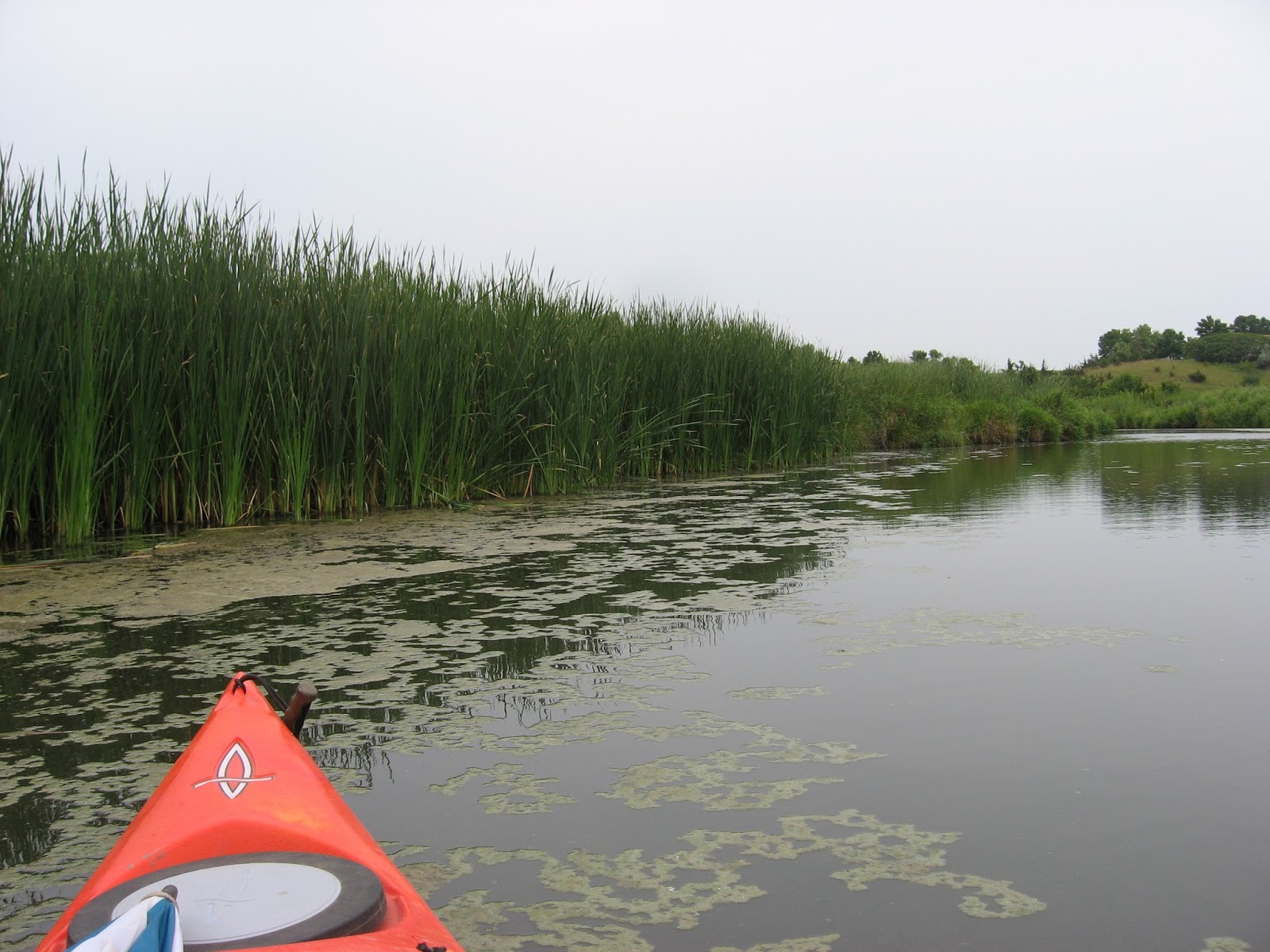
This blog is designed to highlight the paddling opportunities within South Dakota, mainly within a 50-mile radius of Sioux Falls. While Sioux Falls is far from the adventure of coastal regions, there is a certain satisfaction in utilizing the available waterways to observe weather, water conditions, and the landscape along the shoreline. In addition, there is a wealth of animal life on the waters of small South Dakota lakes, rivers, and creeks, including geese, ducks, pelicans, great blue heron, egrets, hawks, owls, perching birds, deer, raccoons, and beaver. Eagles, fox, and coyote are also sometimes spotted.

The sites described are places where I have kayaked over the past few years, mostly in South Dakota but sometimes including locations in Iowa and Minnesota. One of the best sources of information on the accessibility of small lakes is the South Dakota Atlas and Gazetteer, the large map book of South Dakota. Lakes with a public access are generally identified by a boat symbol marking the location of a launching site on public land.

You will notice the menu of paddling locations on the right side of the blog. Each of the postings is linked to one of the areas, and my intention is to provide a continuing review of the places where I paddle. Perhaps these narratives will help readers select waterways of interest to them. Please feel free to offer a comment regarding any of my postings; I would welcome the dialog.

I also maintain a companion blog that describes hiking opportunities within the Sioux Falls area. You can access that blog at: http://hikingsiouxfalls.blogspot.com

Wednesday, August 14, 2013

Lake Alvin: Mid-August 2013


Much of my kayaking of late has been at either Family Lake or the pond on the Outdoor Campus in Sioux Falls where I have served as a volunteer for paddling classes or events.  Today, however, the morning was overcast with temperatures in the 60s, and I decided to slip away to Lake Alvin for a morning paddle.  My paddling opportunities will be limited over the next three weeks or so, and I wanted to take advantage of the day.
I found the lake quite full; the water was lapping over part of the dock as I put in within the recreation area on the northern end.  The water at the dock had a sheen of green algae for a couple of feet out into the lake, as it often does at this time of year.
For the past several years, I have used a mat over the trunk of my car to slide the kayak up onto the rollers of the Yakama rack atop my Honda Civic.  When there is a contrary wind, the mat tends to fly off the car and complicate my loading routine.  I find myself sometimes trying to hold on to the mat to prevent it from blowing off while, at the same time, manhandling the kayak up over the trunk.  My pal, Dave Fink, has begun using a similar process to slide his kayak up onto his van, but he has improved my method by adding hooks to the mat that slip onto the rack and keep the mat in place despite effects of the wind.  After returning from a recent trip, he gave me a set of hooks to attach to my loading mat, and they are now in place and working well.

There was a light breeze blowing out of the east, and I tried umbrella sailing for the first time this year.  As I set out from the dock, the wind was about 45 degrees off the bow, and I did make slow progress.  The wind was just too light to sustain my interest in sailing, so I put the umbrella under a deck bungee and took up the paddle.
Heading south toward Nine Mile Creek, I passed a great blue heron along the eastern shore.  As I continued down toward the creek, a pair of these large birds flew just ahead of me.  Upon my approach, they would launch off into the air and move ahead of me for a couple hundred feet.  And so the relationship would continue as I moved up into the creek.
Because of the high water, it was easy to negotiate my kayak over the bar that forms at the mouth of Nine Mile Creek. 
I continued up the creek only as far as the bridge upstream a half-mile or so and then turned back for the long slog back to the recreation area dock.
As usual on a midweek morning, the lake was empty of any boat traffic.  The only people I saw were sitting in lawn chairs fishing on the public access dock.  Otherwise, no one was in sight either on the lake or on the shore.  Just me and the birds today!
As I loaded up my kayak for the trip home, I noticed some new signage located up from the recreation area dock indicating the relatively new hiking trail that leads into the wooded area above that portion of the lake. There is a great view over the lake from this hiking trail.  Anyone interested in it can check out my hiking blog at http://hikingsiouxfalls.blogspot.com for a description and set of photographs that I completed last fall.
I was out on the water for an hour and a half this morning.  It was a tranquil cruise over familiar waters, but then Lake Alvin is only 15 minutes away from my eastside Sioux Falls home, and I go there frequently over the summer. 

A complete set of the photographs of this cruise can be seen on my Flickr page at the following URL:
http://www.flickr.com/photos/jayheath/sets/72157635070165773/

Tuesday, July 30, 2013

Renwick Lake in Icelandic State Park, ND: July 23, 2013


Patricia, a reader of this blog from Omaha who also paddles lakes and streams in South Dakota, has sent me a new guest narrative describing her recent cruise on Renwick Lake, located in Icelandic State Park, North Dakota.  This is Patricia’s third guest narrative this season; her observations and experiences closely reflect my own solitary cruises.

Icelandic State Park, containing Renwick Lake, is located a few miles east of Cavalier, ND, near the Canadian border.  There is a dam at the east end, which is causing detours during work, and the Tongue River is somewhere at the other end.

I was in search of the river and started out about 10:45 from the boat ramp.
It was a clear and windless day, so paddling was easy.  I started to the left along the dam, and then came across a steep bluff filled with cliff swallow nests.  The bank was teeming with swallows darting in every direction and landing in the holes.  I paused to watch them speeding around.

In the reeds that fringed most of the lake shoreline, I discovered these two fugitives from the park beach over on the north shore.  This being a Tuesday, there was no one else on the water, and only one family on the beach when I finally pulled out.  Their mom told me the park was often deserted on weekdays, but very busy on the weekends.
Further along the south shore I came to the golf course.  It looked like a Grecian sylvan scene – with golf carts.  I stopped hugging the shore and paddled out to get a closer look at what appeared to be a large rock but turned out to be an equally large tree trunk.
I was enjoying this paddle with the cool temperatures, calm water, and solitude.  The only human activity I saw was an occasional crop duster overhead, including one biplane.  I continued toward the west end of the lake, keeping an eye out for the Tongue River.  There were several areas of dense vegetation in the water along the shores that hampered my exploration.  I picked my way very carefully through these and found a den of some sort on the shore, but no river yet.
There was lots of bird noise and activity around the lake.  I spied this pelican at the far north end and paddled toward him, hoping he might lead me to the river’s mouth, but found only more reeds and trees.  I was having a great day anyway.

As I turned back, the placid water made for some impressive reflections of the great clouds overhead, adding to the splendor of the lake’s solitude and peace  (But still, no river.)
I was beginning to feel like I would never find the river.  I paddled back along the west shore, getting stuck and freeing myself from the matted vegetation, when I caught a glimpse of the smallest break in the trees.
It was barely discernable, but there was the river, finally.  It was very narrow where it flowed into the lake, but as I entered it became a decent-sized stream.  The banks were mostly reeds with groups of trees.
I paddled up the twisting river about half an hour until I approached what appeared to be the beginnings of a beaver dam.  I didn’t want to disturb it, so I turned and headed back to the boat ramp.
There were several spots in the banks that appeared to be where animals would come down to the water, but I never saw any.
I pulled out of the water about 1:00 p.m.  Renwick Lake was a great kayak trip for me, with beautiful scenery and the potential for birds and wildlife sightings.  It didn’t hurt that the weather was so cooperative.  But brother, it’s a long drive north!

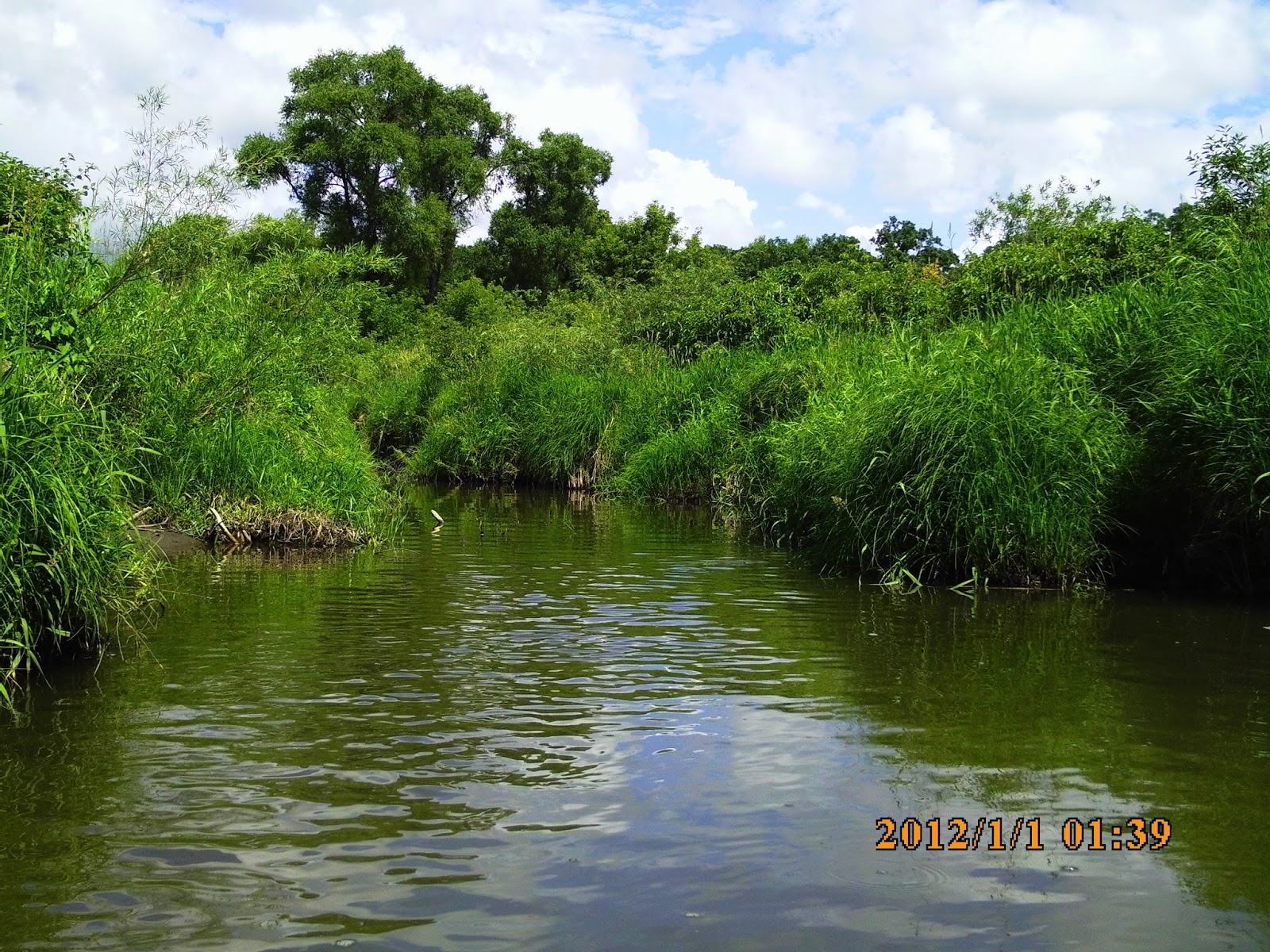
My apologies fore the date stamp on the pictures; I changed batteries and forget to reset the camera.  Argh!


Thursday, July 18, 2013

Lake Alvin: A Mid-Summer Cruise


This morning I decided to head out to Lake Alvin for an early morning paddle.  We have been through a long string of sweltering days here in the Sioux Falls area, so an early start seemed essential.  I have not been on Lake Alvin since late April and looked forward to seeing the transformation from spring to full summer.
I arrived at the public access point on the southwestern shore about 9:00 a.m.  The sky was clear, the temperature about 80 degrees, and there was a brisk wind coming out of the south.
As usual, I paddled across the lake and began my trip south into Nine Mile Creek.  When approaching the southern end of the lake and the entrance into the creek, it is critical to keep to the left (east) side of the shoreline to pass over the silted bar of mud and sand that comes down the creek into the lake. 

I continued south into the creek and easily passed under the bridge and into the narrow stream than flows south.  There are a number of curves in the stream, and the channel tends to move from one side to another.  A paddler has to keep examining the flow and be ready to scoot over to the appropriate side as dictated by the bottom.  In the channel, the water depth is generally two to three feet and is generally a few feet wide. 
The creek is where I most often come across wildlife, including beaver and waterfowl.  Today, a great blue heron kept ahead of me; it would rise out of the bush upon my approach and move upstream until I approached again.
After paddling upstream, I lowered my rudder and coasted down the current to the mouth of the creek.  I guess that the distance on the creek portion of the cruise was about 3 miles roundtrip.
Even though the lake itself was a bit choppy from the brisk south wind, the creek was tranquil.  The bank and towering plant life provides a windbreak of about 8 feet, so the creek is nicely protected.
After exiting Nine Mile Creek, I decided to explore the waters on the southeastern end of the lake.  Because of the shallow conditions and muddy bottom, I normally avoid that portion of the lake. I cruised over to the side and found myself fascinated by the many schools of small black fish.
Looking over the surface of the water, these schools looked like shadows on the water that moved about.  Some of the schools were several feet in length and seemingly contained hundreds of fish.  They would approach my kayak and surface for a moment in a sparkling display as they came to the surface for a moment. 
These schools would move about that section of the lake, forming into various shapes.  At any one time, I could see six or eight groupings.  My attention was riveted on these fish for a few moments.
After passing through the fish, I continued moving north and passed groups of carp swimming generally in the direction of the fish schools.  I wondered if the carp were headed for a meal of small fish!
Heading north on the main body of Lake Alvin, I was traveling with the wind, and little paddling effort was needed.  As often occurs on a windy lake surface, the waves were sometimes outpacing my kayak, creating a following sea condition.  I continued north until I was across from the recreation area launching site, about two-thirds of the way up the lake.  From there, I turned and headed into the wind for my return trip to the southeastern access area. 
The wind created a healthy chop in the water, and I moved over to the western shore to make my way back.  When waves develop on a lake, I feel safer paddling close to the shore.
In the wind, I resorted to my old paddling instruction in which I learned that it is the push of the arm that translates into power rather than pulling.  And, as normal in these conditions, I made my way from one landmark along the shore to another and counted my strokes.
Today, I spent about 90 minutes on the water and didn’t see anyone, either on the water or on the shore.  It was totally a solo experience. 
For the past three weeks, I have been serving as a paddling volunteer at the Outdoor Campus in Sioux Falls.  Last Tuesday, I performed this service at the pond behind the Outdoor Campus complex and worked with two people who had limited experience in paddling.  For further information of paddling opportunities available through the Outdoor Campus, check out the heading in the menu on the right side of the blog.